In winter, it is particularly useful to look at how we can keep our respiratory system, and all it represents, healthy. As always, our body shows us how we are both physically and spiritually.
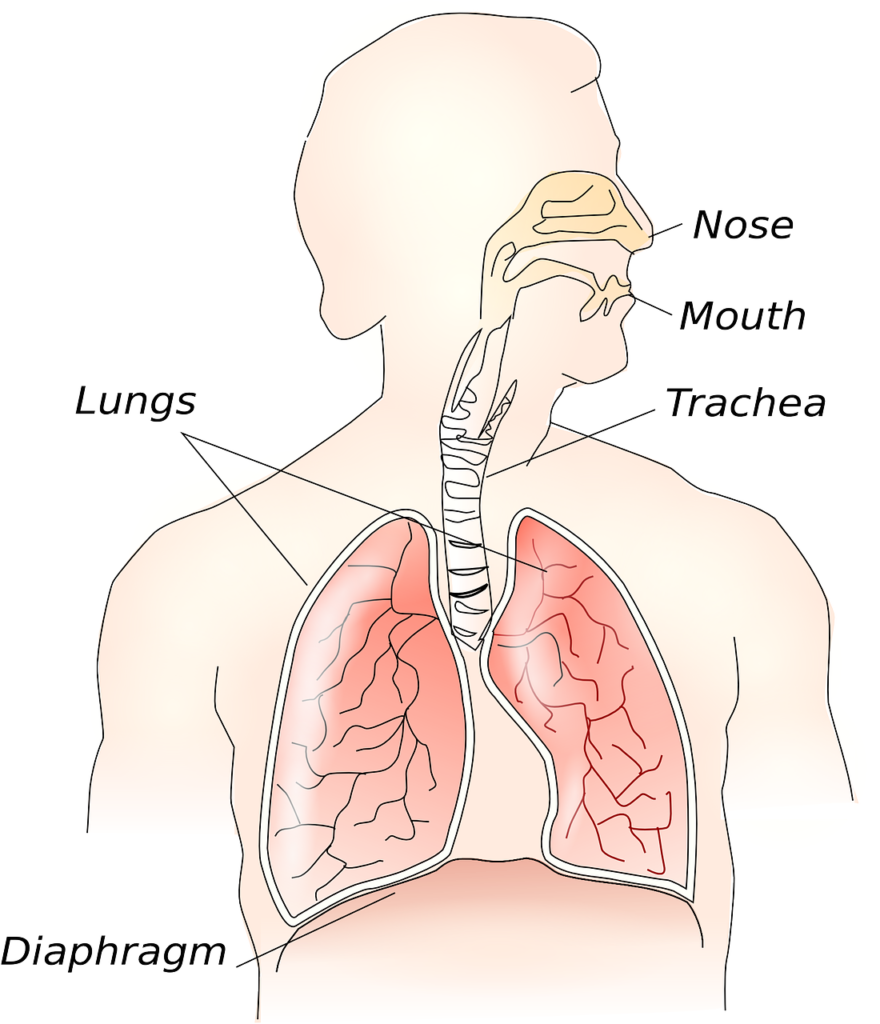
Image by Open Clipart Vectors – Pixabay
The primary respiration organs are the lungs, the nose, and the sinuses. On a physical level, these enable us to inhale oxygen and exhale carbon dioxide. On a spiritual level, they represent our capacity to take in life and experience and to let go of what no longer serves us.
Physically, the nose cleanses and warms the air we breathe so that the lungs have an easier job. Spiritually, our sense of smell helps us to discriminate what we allow and don’t allow into our experience.
The sinuses are air cavities which not only also warm the air we breathe but that also help us hear because they act as sounding chambers for the voice. Clear sinuses are also a portal to a deeper life whereas blocked sinuses represent resistance to spiritual development.
Issues with breathing can suggest several emotional issues such as feeling unworthy, guilt, feeling smothered, melancholy, irritability, impatience, and the suppression of what we really feel. Respiratory problems are therefore an opportunity to face ourselves and the areas of our lives that we might want to explore.

Image by John Hain – Pixabay
The most effective types of music to help with this are reggae, ragtime, big band music and classical music of the Romantic period. Reggae grew from Jamaican and African roots with soothing and syncopated rhythms. Try listening to anything sung by Bob Marley.
Ragtime is a type of piano jazz which developed in the honky-tonk jazz cafes of the 1890s. Examples to listen to are Joplin’s Maple Leaf Rag which can ease laboured breathing, and Stravinski’s Piano Rag Music which can open congestion.
Big Band music combines strings and percussion with woodwind and brass. Playing the latter two instrumental categories actually help improve breathing because they exercise the lungs. Examples of Big Band Music are Duke Ellington’s Mood Indigo which can help laboured breathing, and anything by Glen Miller.
Classical music of the Romantic era, late 1700s to early 1900s, is deeply expressive and helps with breathing and the easing of emotional constriction. Examples to listen to are Mahler’s 4th Symphony which can ease emotional tightness of the lungs, Handel’s Water Music which can ease lung congestion, and Mozart’s Symphony no. 40 which can calm respiratory distress.
Within the Romantic era, waltzes, and minuets (ac certain type of dance) were also composed and these can be particularly helpful for breathing problems. Examples to listen to are Brahms’ Liebeslieder Waltzes and Lullaby, both of which can open the emotions and promote restful sleep; and Beethoven’s Minuet in G, which can help to calm asthma attacks in children.
If you are interested in understanding more about this subject, then read Ted Andrews’ book Music Therapy for Non-Musicians, Dragonhawk Publishing, 1997.
Also try listening to my music on Spotify, Amazon Music, iTunes, You Tube, Deezer etc. It is relaxing and will help to balance your breathing. Grace, Forgiveness and Compassion can be found under my name, Laurelle Rond.
I send out a 15-20 minute Whats App audio on letting go of toxic emotions every Monday morning during term time at a cost of only £33 until the end of June 2023. Let me know if you would like to receive them by emailing me at laurelle@laurellerond.com
Meanwhile, enjoy celebrating the return of light with Diwali, Christmas, Hanukkah, Loi Krathong and Yi Peng in Thailand, the Lantern Festival in China, and St. Lucia’s Day in Scandinavia.

Image by Monika – Pixabay
With love and blessings, Laurelle
