Our nervous system is like a telephone communication system, linking one part of the body to another in a complex network. The central nervous system is made up of the brain and the spinal cord and contains 31 pairs of nerves which stimulate sensory and motor functions. These nerves divide into the autonomic nervous system and the peripheral nervous systems.
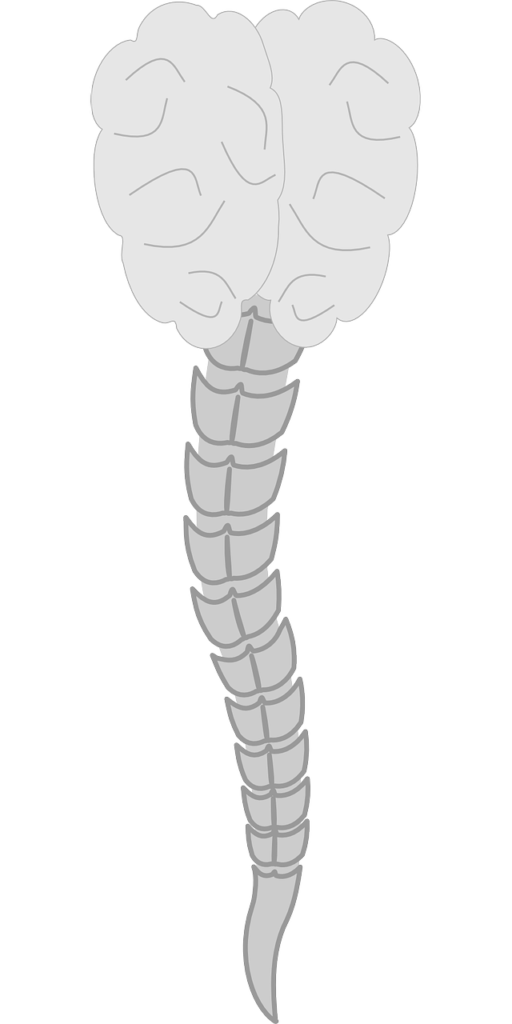
Image by OpenClipart Vectors – Pixabay
The autonomic nervous system controls everything that operates behind the scenes. It is like the stage manager of a play. Everything is there, ready and waiting for the actor who does not have to think about it. The stage manager is only ever called when something is missing. In a similar way, we only realise there is a major problem when the autonomic nervous system fails in some part. The autonomic nervous system makes our heart beat, and pump blood to our cells. It causes the liver and kidneys to cleanse that blood, and it enables us to breathe.
The peripheral nervous system, however, shows itself more readily because it is so closely tied to the sensory organs: eyes, ears, tongue, nose, and skin, enabling us to see, hear, taste, smell, and touch. When any of these sensory organs becomes problematic, we cannot help but be aware of it. For the eyes it can be helpful to ask ourselves what we might not be seeing clearly or perhaps what we are not willing to look at. For the ears, what do we not want to hear? For the tongue, what tastes bad in our life? For the nose, what smells horrible? For the skin, what don’t we want to touch? Problems with the peripheral nervous system can therefore draw emotional issues to our attention such as anxiety, shame, feeling isolated and/or unloved.
Music to help the nervous system can include symphonies, big band music, and reggae. Symphonies, which came to the fore in the 1700s, are helpful because they are played by orchestras and use many different instruments: strings, woodwind, brass, percussion; enabling them to have an effect on many different parts of the nervous system. Big band music peaked in the 1930s and 1940s using strong rhythm and melody played by a combination of brass instruments. Reggae arose out of Jamaican and African music and is closely linked to the Rastaferian religion. Its syncopated rhythms can have a calming effect upon the nervous system and has even proved helpful in soothing colic in children.
Examples of symphonies are Haydn’s Symphony no. 85 (the Queen’s Symphony) to strengthen the entire nervous system; Beethoven’s Ninth Symphony to help brain imbalances; and all of Schubert’s Symphonies to balance blood pressure.
Examples of Big Band music are Duke Ellington’s Night Creatures and other pieces to balance equilibrium and help vision; any music by Benny Goodman to empower the nervous system; and any Reggae to soothe it.

Image by Clker Free Vector Images – Pixabay
If you are interested in understanding more about this subject, then read Ted Andrews’ book Music Therapy for Non-Musicians, Dragonhawk Publishing, 1997.
Also try listening to my music on Spotify, Amazon Music, iTunes, You Tube, Deezer etc. It is relaxing and will help to calm your heart on all levels. Grace, Forgiveness and Compassion can be found under my name, Laurelle Rond.

I send out a 15 – 20 minute Whats App audio on letting go of toxic emotions every Monday morning during term time at a cost of only £33 until the end of June 2023. Let me know if you would like to receive them by emailing me at laurelle@laurellerond.com
Meanwhile, wishing us all wisdom and peace as consciousness navigates the path towards change.
With wishes for a Happy New Year and a peaceful, wise and harmonious 2023
Love from Laurelle
